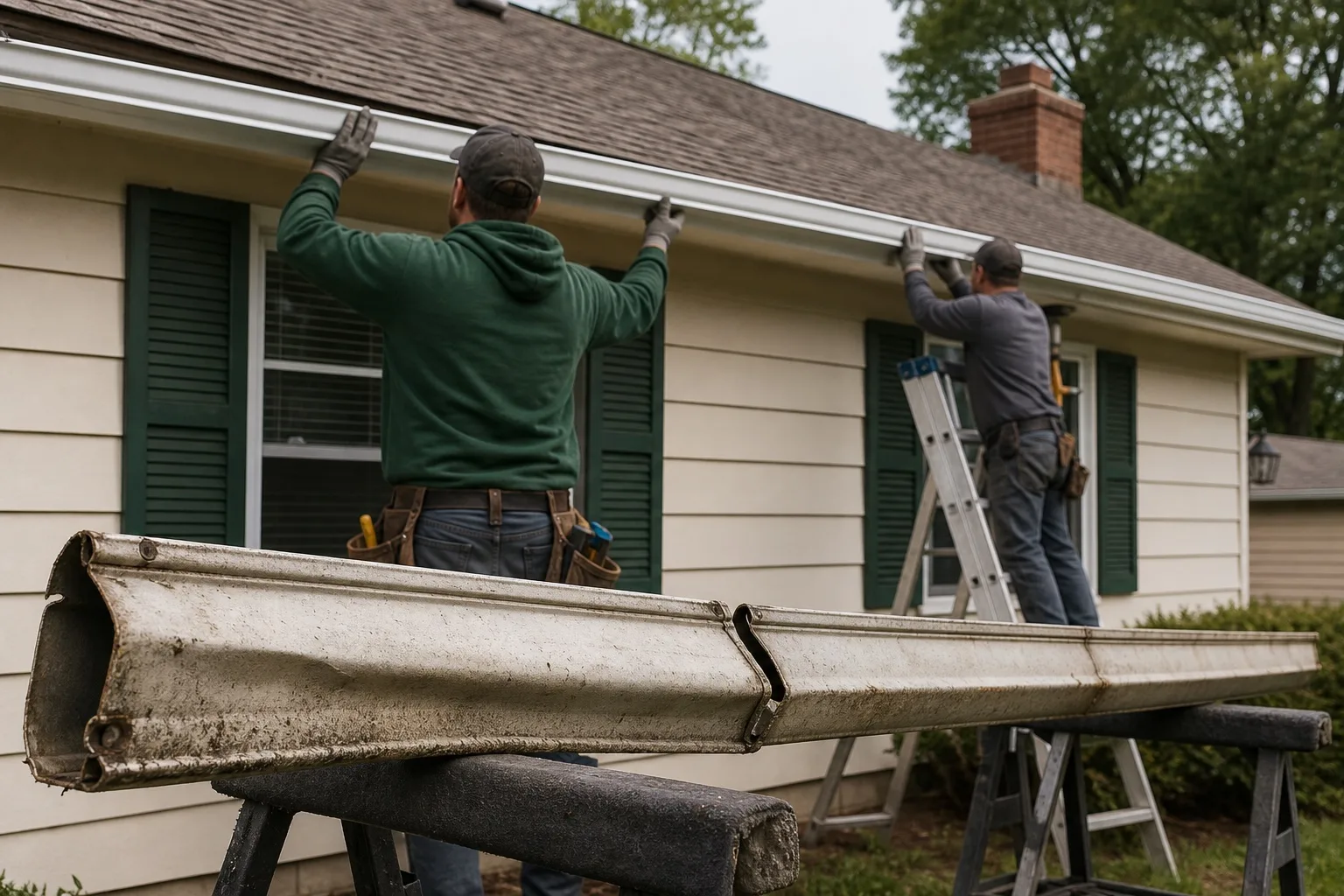
Repair or replaceJudge the condition of the whole run
Age alone does not decide the job. Look at the number and location of failures, whether water stands after dry weather, the condition of mounting points, and whether previous patches are holding. A clear estimate separates reusable sections from those being replaced.
- Repeated leaks across seams or corners
- Long sections pulling away or holding water
- Widespread corrosion, cracks, or storm damage
- Recurring overflow despite cleaning
Hidden conditionsPlan for what removal may reveal
Old gutters can conceal softened fascia, damaged trim, missing drip-edge coverage, or fasteners that no longer hold. Ask how those findings will be photographed, priced, and approved before additional work proceeds.
- Fascia and mounting-surface condition
- Drip-edge relationship to the new gutter
- Rot or insect damage outside the base scope
- Written approval for added carpentry
Replacement scopeUse the opportunity to correct the water path
Replacing like-for-like may preserve the same outlet bottlenecks or poor discharge locations. Review gutter size, slope, downspout quantity, valley flow, and ground discharge while the layout can still be improved.
- New profile, material, and finish
- Downspout additions or relocations
- Extensions and discharge points
- Removal, disposal, cleanup, and warranty