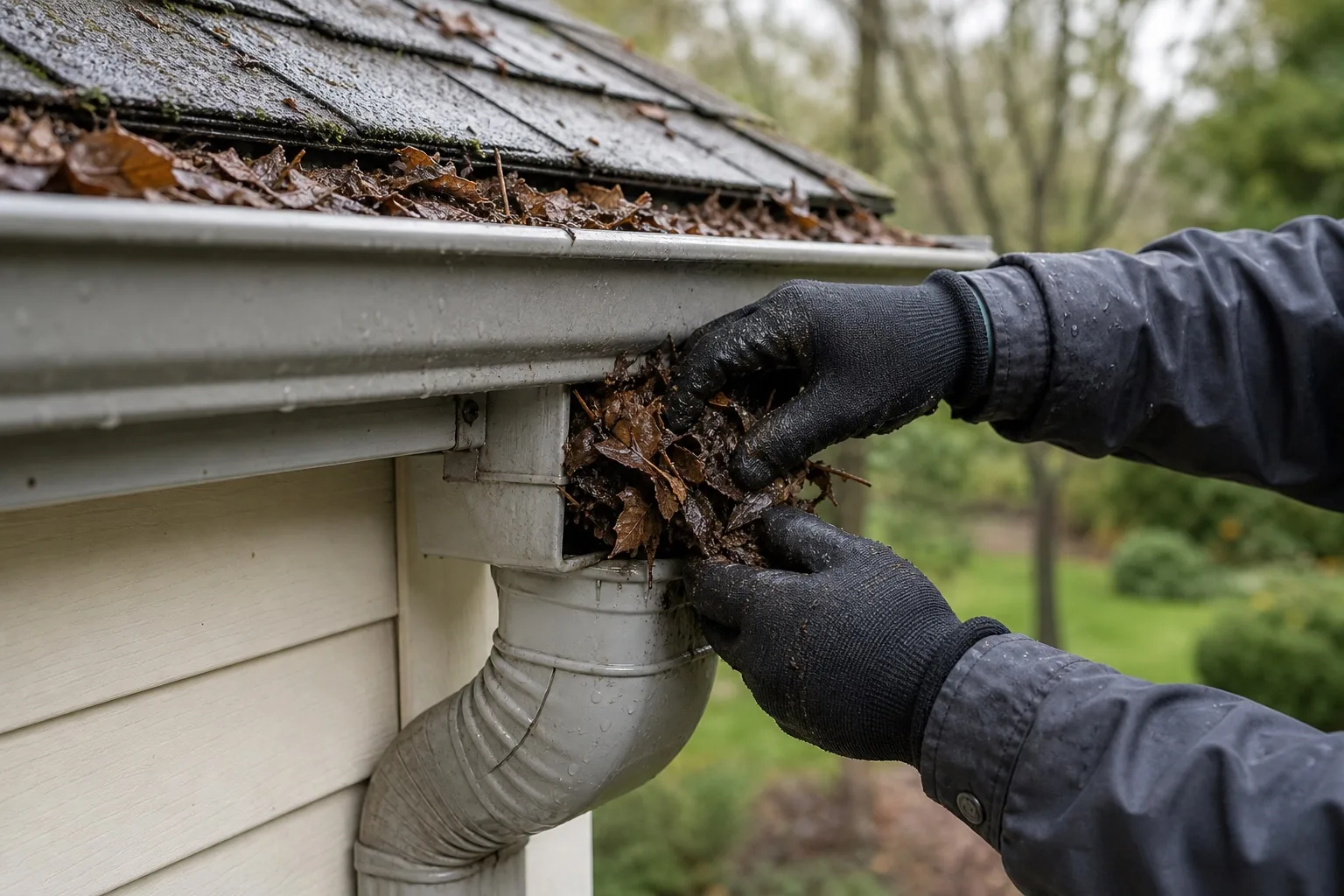
DiagnosisLocate the restriction before forcing water through
Clogs commonly collect at the top outlet, tight elbows, crushed sections, or underground transitions. The safe method depends on access and how the downspout terminates.
- Top outlet packed with leaves or shingle grit
- Elbow restriction
- Dented or separated downspout
- Blocked underground drain connection
DischargeMove roof water away without creating another problem
The outlet should direct water away from the foundation and avoid erosion, walkways, and improper sanitary connections. Springfield’s Environmental Services notes that improperly connected roof downspouts can add unwanted flow to the sanitary system.
- Secure extensions and splash blocks
- Avoid discharge toward the foundation
- Watch for erosion or recurring puddles
- Confirm underground destinations when they are unclear
Scope questionAsk what happens after the clog is found
A cleaning scope may include accessible clearing but exclude buried drain diagnosis, pipe repair, or excavation. Clarify that boundary before work begins.
- Accessible downspout clearing
- Flow testing
- Elbow removal and reattachment
- Referral or separate scope for underground drainage